

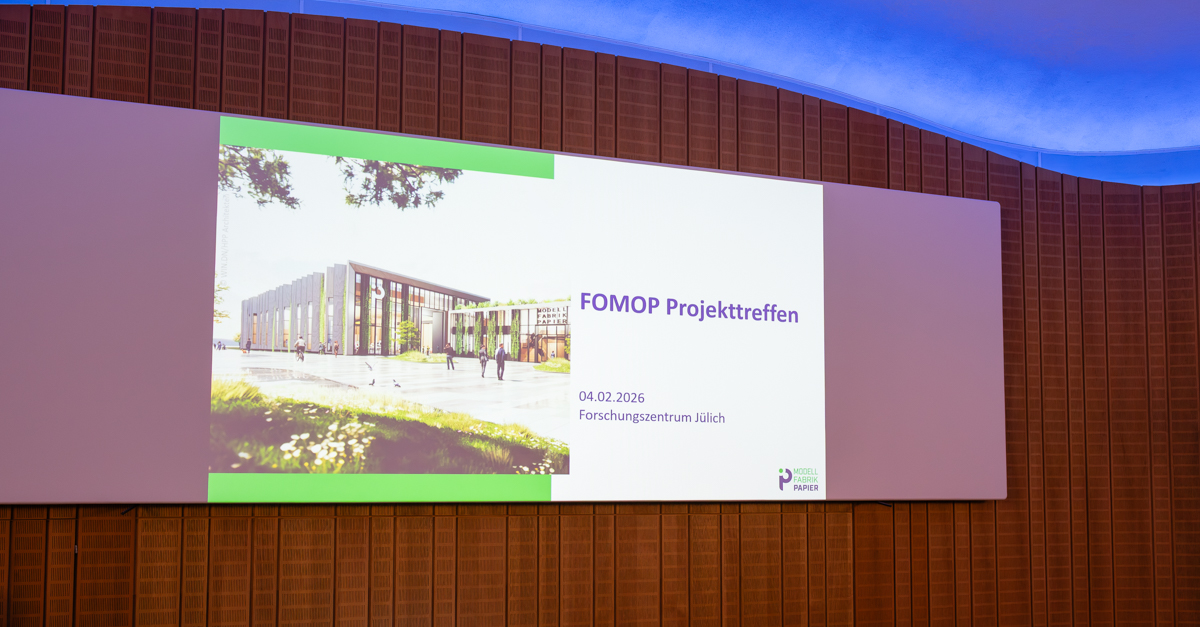
What has been achieved in the last research year? What milestones will be targeted in the upcoming months? Are the specific work packages on track?
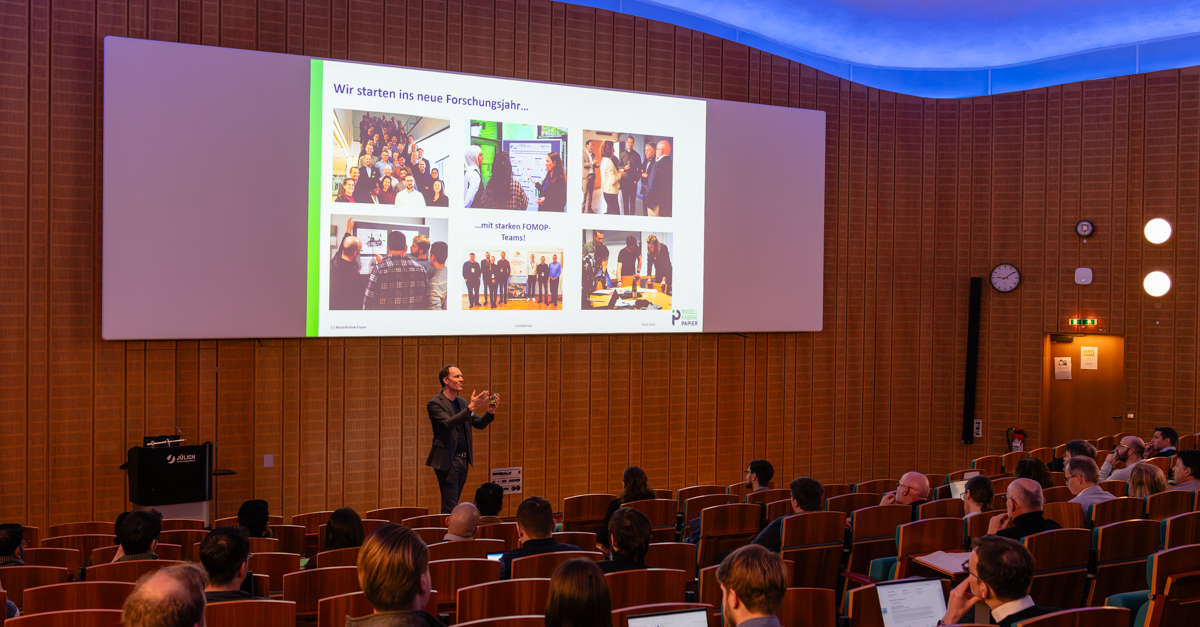
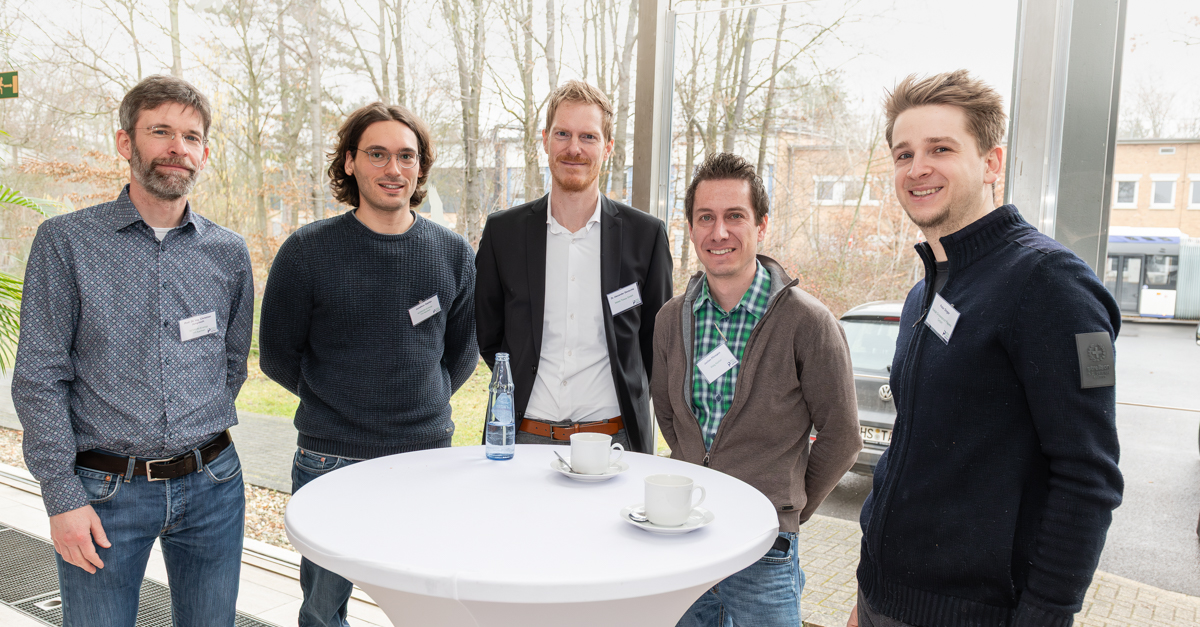
At the annual meeting, the joint project partners of Forschungscluster Modellfabrik Papier (FOMOP) from academia and industry came together to discuss these questions and more. Once again, the meeting focused on close networking between research partners and Modellfabrik Papier’s shareholders.
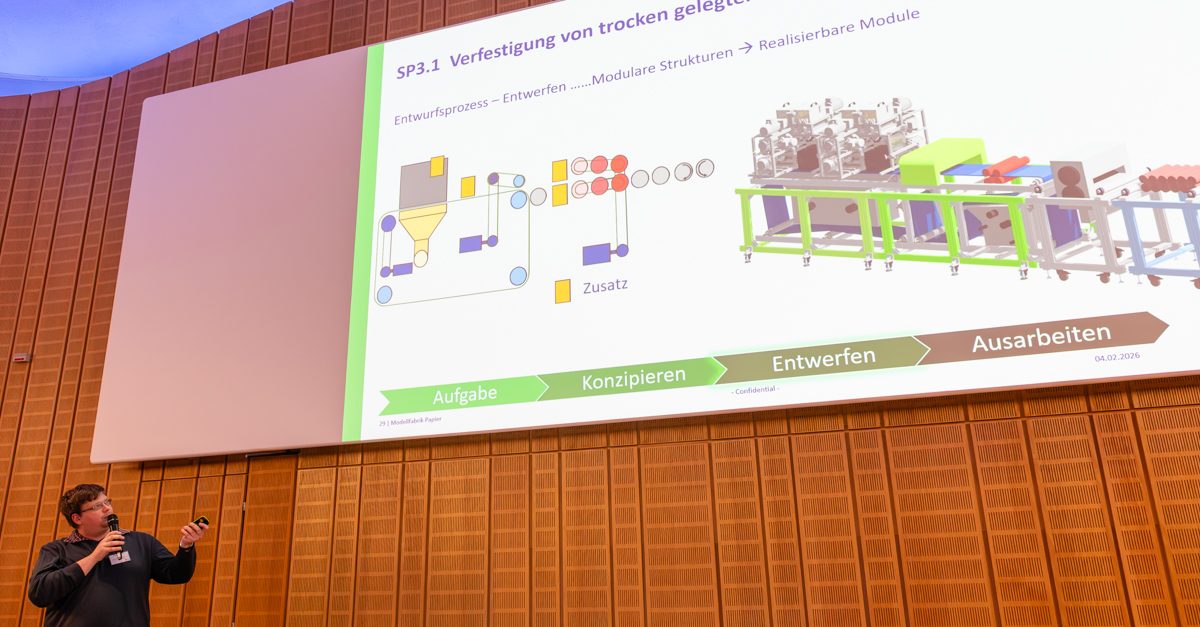
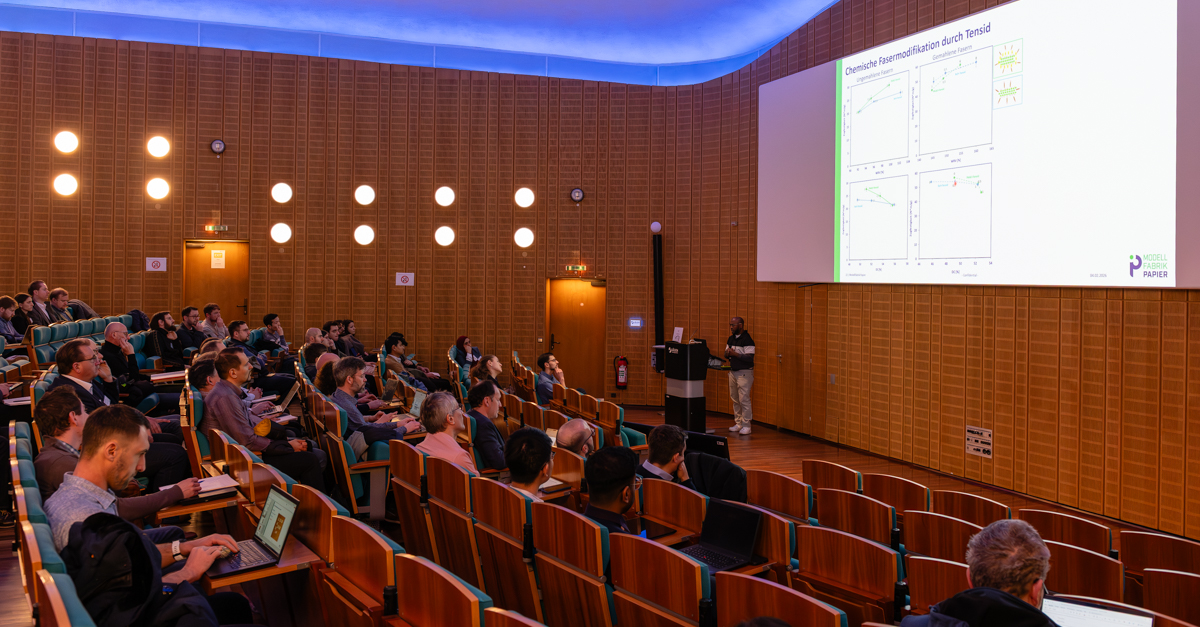
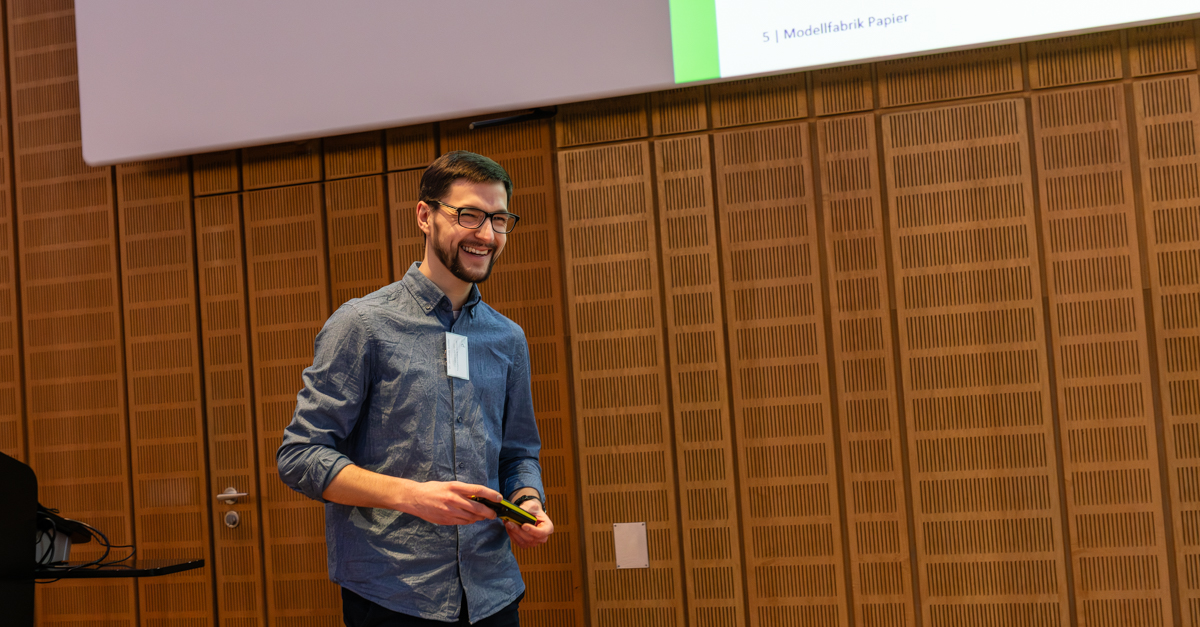
The current status of the four main areas of research was presented, covering topics such as the customisation of raw materials for more energy-efficient paper production, alternative mechanical and thermal concepts for paper drying, and paper production without using water as a carrier medium for fibres. The research teams from MFP and its seven partners gave concise presentations on their ongoing research work. What milestones were achieved in the individual work packages last year, and what were the findings and insights?
Feedback from industry
The annual meetings offer the research teams an opportunity to present the status of their work and address specific questions to industry partners and shareholder representatives. ‘For our shareholders, these status meetings are a well-established platform to ensure relevance, applicability and transfer potential at an early stage,’ explains MFP Managing Director Peter Bekaert. This helps to ascertain that the parallel research work in the various work packages is heading in the right direction. ‘Our technological developments must meet the needs of industry,’ says Bekaert. Direct dialogue between researchers and industry representatives helps to clarify practical issues and accelerate research. At the same time, shareholders gain deeper insights into the progress of research.
Working collaboratively
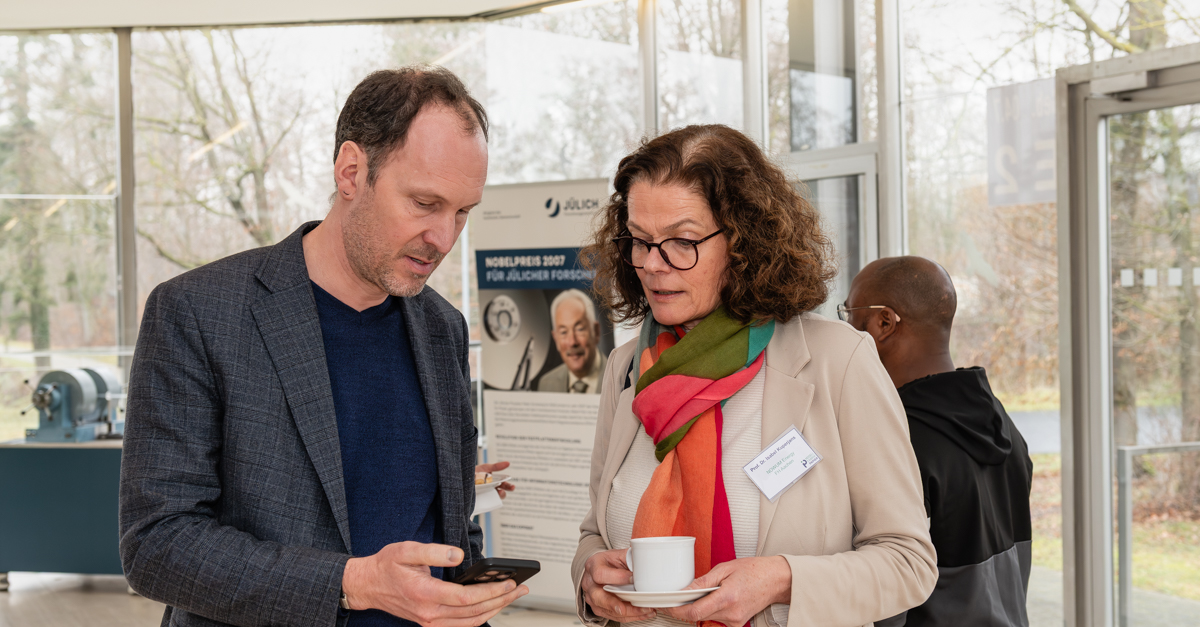
One proven way of achieving this is through thematic round table discussions, where researchers and industry representatives discuss specific tasks from a research focus’s work packages in small groups. This provides an opportunity to share experiences, debate research methodology and explore new perspectives together. ‘It is this practical exchange and collaborative work in interdisciplinary teams that makes our research so strong,’ Bekaert emphasises. This process also checks and strengthens the interconnections between the work packages, which is an important signal to funding bodies.
Looking ahead to 2026
Work will enter a decisive phase in this research year. Several work packages will see the finalisation of the designs for test rigs and pilot plants, and the first technology carriers will be constructed. ‘Until our new building is ready for occupancy, we have set up a second interim location in the industrial park in Düren as a temporary solution,’ reports Bekaert. This will ensure that research can continue uninterrupted in the laboratories at the interim location at Forschungszentrum Jülich and that construction work can also proceed without disruption. Meanwhile, plans are already underway for the continuation of the joint project after the first funding phase ends in mid-2027.
Research meets industry
The joint project FOMOP is investigating various new approaches along the manufacturing process in order to substantially reduce the primary energy requirement in industrial paper production. Basic research is giving rise to entirely new technologies and new approaches to process optimisation for the production of fibre-based papers. The seven research partners include the ITA at RWTH Aachen University, the Nowum Energy Institute at FH Aachen, the MAP and PMV institutes at TU Darmstadt, TU Dresden, the PTS Institute for Fibres and Paper, and IBG-2 at Forschungszentrum Jülich.
Feel free to contact us if you would like to find out more about Modellfabrik Papier, our tasks and our projects.
Feel free to contact us if you would like to find out more about Modellfabrik Papier, our tasks and our projects.
Click on the button below to load the content of Brevo to subscribe to our newsletter.