


Rethinking paper production is the mission of the Modellfabrik Papier. How does the research organization strategically align its activities and how does it organize innovation transfer? In an extensive process, the shareholders worked intensively on setting the course for the coming years, which will be characterized by R&D, transfer, and scaling.
The history of the Modellfabrik Papier is easy to summarize: rising raw material and energy costs are putting pressure on companies in the paper industry, declining operating results are affecting investment capacity, and the pressure for transformation and innovation in the industry is high. What is needed are solutions that go beyond familiar horizons: greater energy efficiency in the manufacturing process itself and thus lower CO2 emissions in production. To this end, 24 shareholders from the paper manufacturing and supplier industry as well as the mechanical engineering sector launched the Modellfabrik Papier as a non-profit research organization at the beginning of 2021. Its mission: to find innovative and disruptive solutions for 80 percent energy savings in the industrial paper manufacturing process by 2045.
Modellfabrik Papier as an open innovator
“As an innovation network, we connect academia with industry, thereby solving two challenges,” says Managing Director Peter Bekaert. Not all companies involved in the research network face the same problems. Many companies in the industry operate within their closed corporate systems with their resources. Modellfabrik Papier turns this heterogeneity of shareholders and partners into a decisive advantage: “In our search for truly fundamental new solutions, we do not dwell on navel-gazing, but open our minds and bring relevant external knowledge into the solution development process in a targeted manner.” The diversity of expertise in the network and the coupling of knowledge areas accelerate problem-oriented innovation. At the same time, internal costs are kept low, access to public funding is facilitated, and the investment risk is shared. Innovation and technology scouting provides access to market-ready innovations that could be implemented quickly and without the involvement Modellfabrik Papier.
“To accelerate transformation, one must leave the beaten path and be prepared to disruptively reorganize familiar processes in parts.”
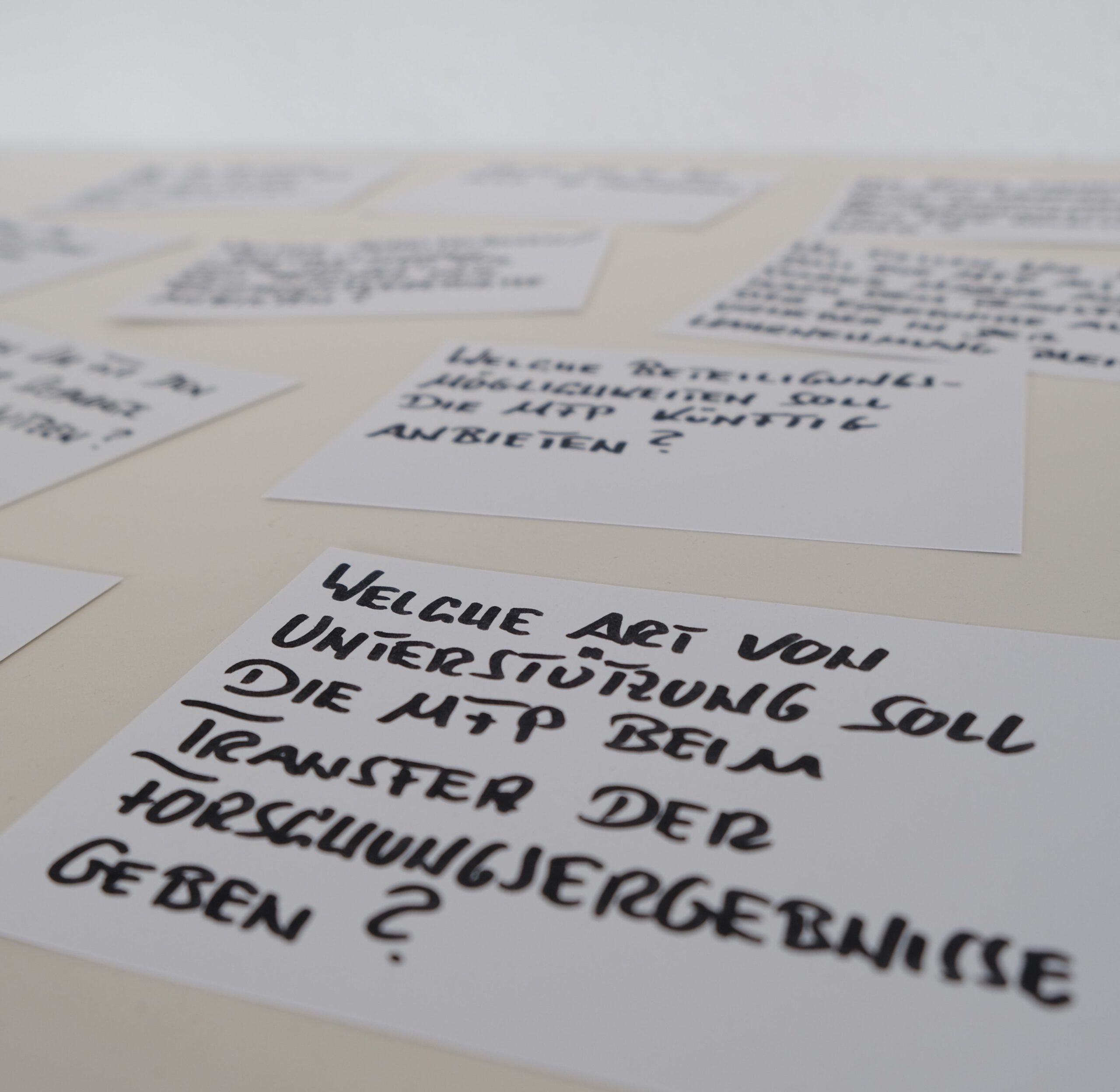
The joint project “Forschungscluster Modellfabrik Papier” (FOMOP) alone comprises over 100 work packages. Seven research partners at locations throughout Germany are involved in four main areas of research[KC1]. Since public research funds were allocated in mid-2023, decisive milestones have been reached in the research work. The first promising approaches for innovation transfer are emerging. “We are therefore already proactively looking,” says Bekaert, “at the strategic direction of our activities after the current funding phase expires in mid-2027 and have asked our shareholders:
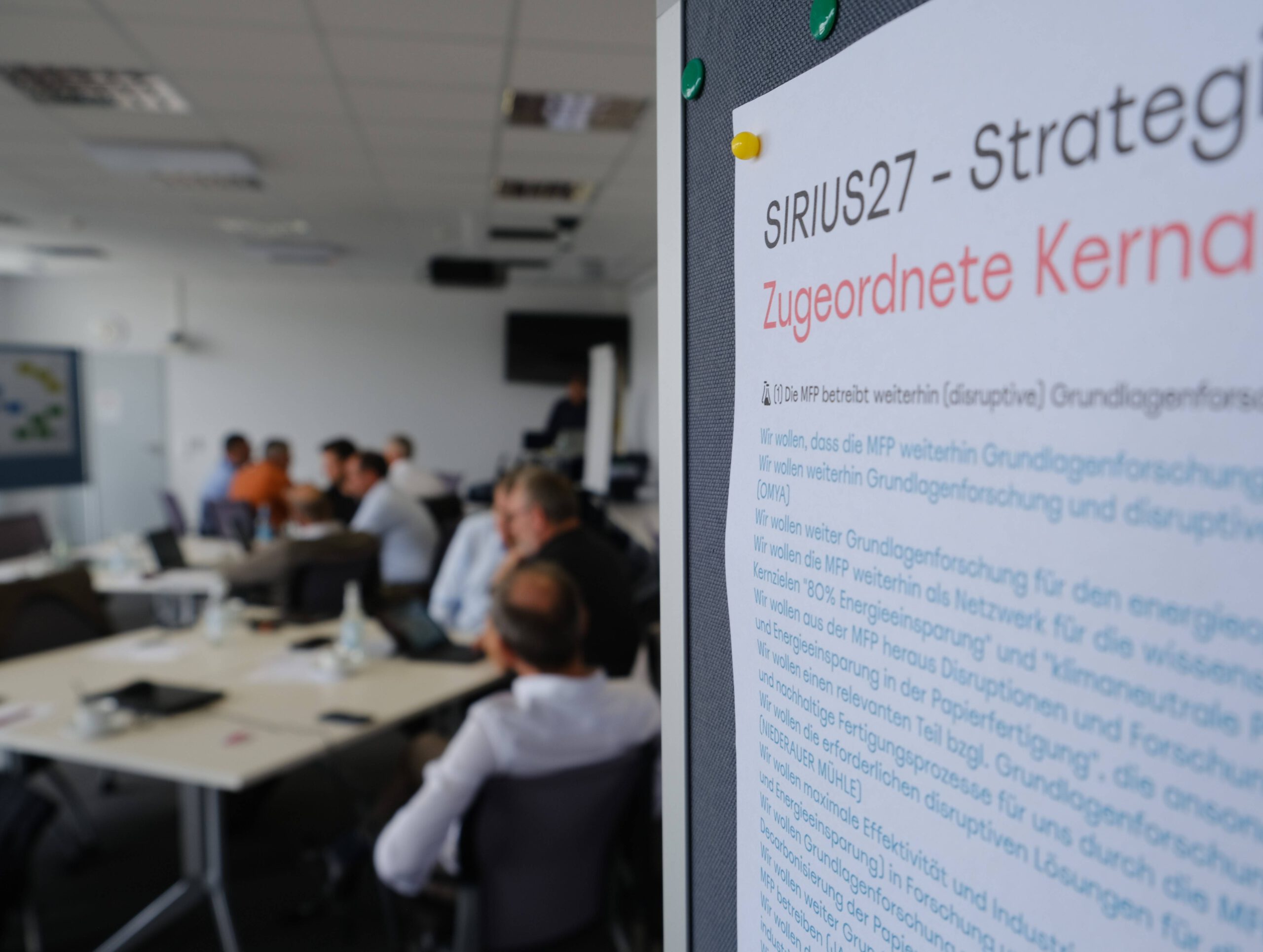
Strategy project SIRIUS27: Envisioning the future of Modellfabrik Papier
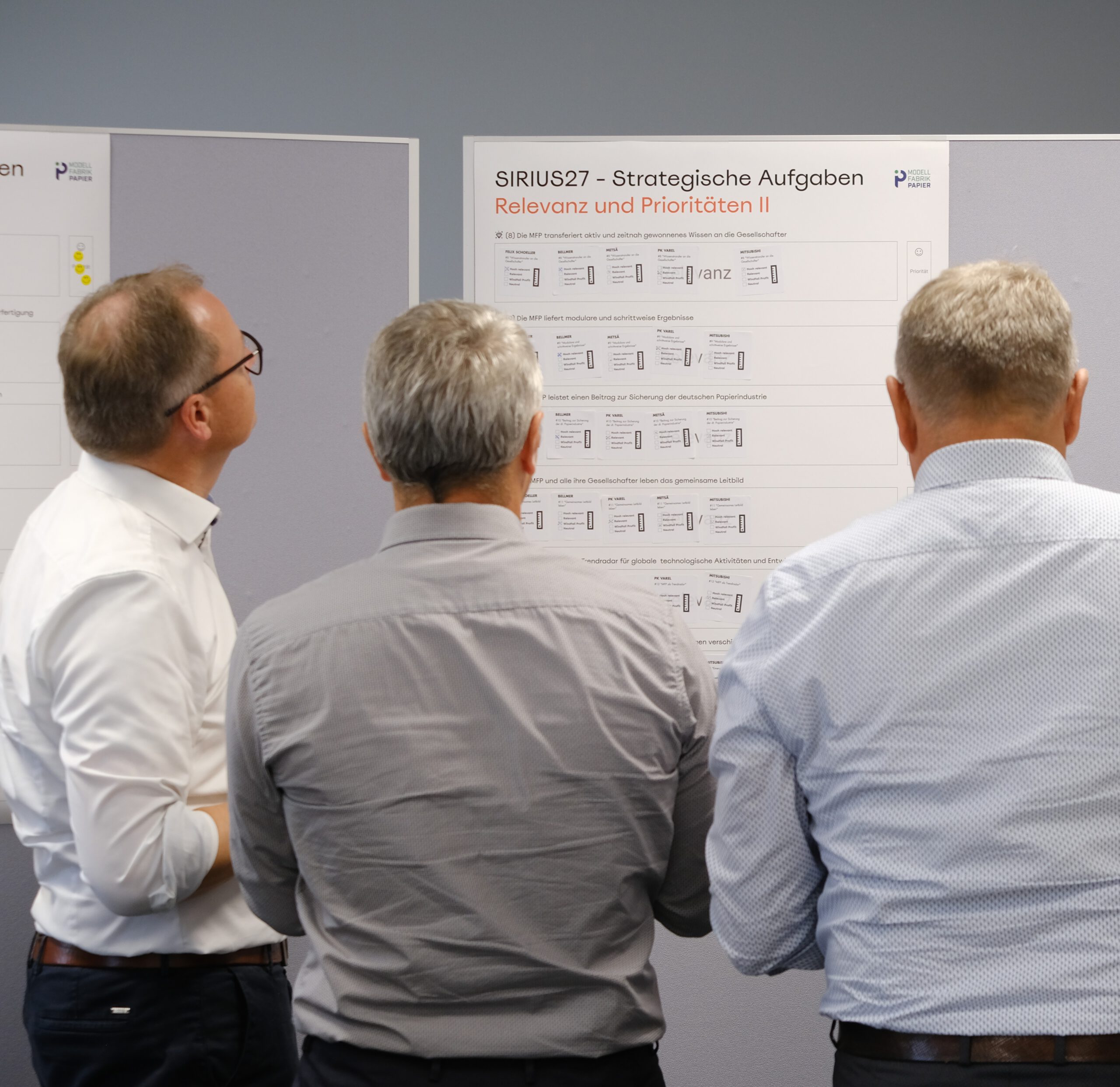
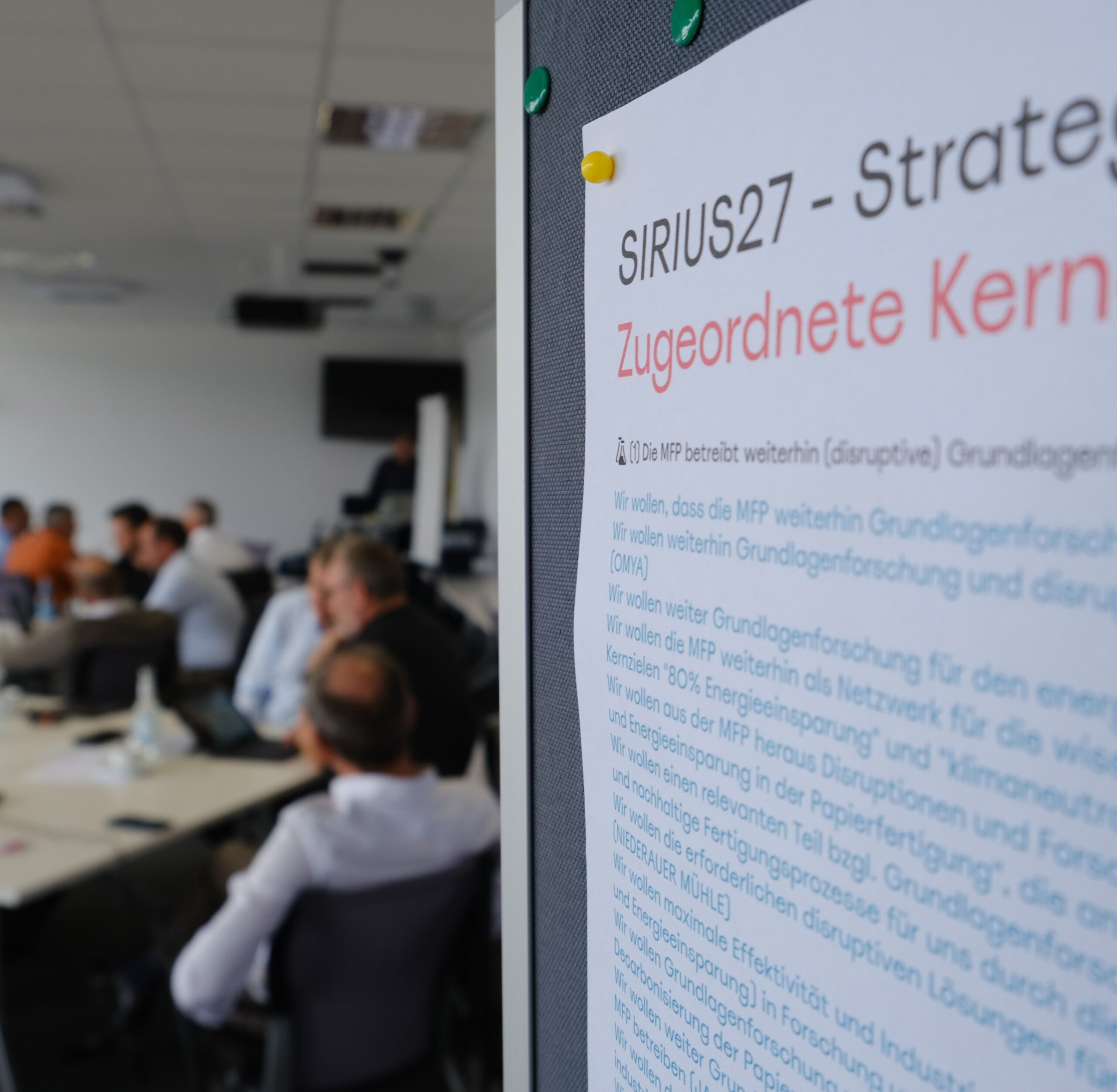
In a multi-stage process involving one-on-one discussions and joint workshops, the shareholders developed a strategy roadmap. It outlines the shareholders’ current and future expectations for research.
“Just as early navigators marked fixed stars when navigating, we too can orient our research activities in a targeted manner that is highly relevant to industry needs and set the right course now,” says Bekaert, explaining the approach. “This allows us to remain agile and dynamic and precisely orchestrate the diversity of our partners with their respective competencies within the network.” This is the only way to unleash the full momentum of innovation work and continue to drive it forward with high speed.
Stage-gate process for innovation transfer
The goal of the Modellfabrik Papier remains climate-neutral paper production by 2045. Since it usually takes about ten years to scale up a new technology from basic research to industrial application, speed is of the essence. Working backwards from 2045, the necessary basic technologies must be ready for upscaling from laboratory standards and demonstration plants to industrial application in seven years at the latest. “In order to bring our newly developed solutions from basic research to a higher level of technological maturity as quickly and effectively as possible, we rely on a stage-gate process,” says Dominic Laaf, Industry Networking Manager at the Modellfabrik Papier. “This process, which has proven itself in industrial development, gives our innovation management a clear structure, reduces risks, and enables us to manage resources in a target-oriented manner.”
Promising solutions from basic research are collected in an ideas pool and systematically guided through successive development phases. At each stage, forecasts of energy-saving potential, technological maturity, economic viability, and scalability are evaluated in consultation with shareholders, research, and industry partners. As part of innovation and technology scouting, market-ready innovations are identified and communicated to the shareholders. This allows processes to be optimised and energy savings to be achieved at short notice without the involvement of Modellfabrik Papier.
Accelerating transformation
The advantage: Research work is more focused on technical details, disruptive potential is identified more quickly, and it is adapted to industrial requirements at an early stage.
“In this way, we avoid the so-called Valley of Death and minimize investment risks,” explains Laaf. Especially in the highly heterogeneous paper industry, with some old, repeatedly modified paper machines, development risks are high and scaling hurdles are technically complex. The wrong partners or a lack of interaction between relevant technology competencies often cause promising transfer projects to fail.
“The paper industry faces the challenge of combining tradition with modernity while at the same time driving innovation for the sustainable paper production of tomorrow.”
In the coming years, the Modellfabrik Papier will move beyond technology development to become a platform for transfer and scaling projects from basic research to industrial application. In doing so, the research network remains true to its credo as a strong partner to the paper industry, leaving the beaten track and enabling bold innovations. As an innovation platform and enabler, the Modellfabrik Papier provides access to public funding and brings together industry partners from various sectors with scientists from different disciplines to drive forward the transformation of the paper industry.